
AI reliability consulting for a single production workflow typically costs a few thousand dollars for a fixed sprint, not tens of thousands for vague strategy. At Topiax, the AI Reliability Sprint is $4,500 for about 10 business days, starting from a Launch Readiness Review done in the last 60 days, with optional Reliability Continuity at $1,500/mo after handover (3-month minimum). Custom integration and pre-launch reviews are separate offers with their own price bands.
If a quote cannot name the workflow, the evidence you will receive, and what is out of scope, treat it as a discovery conversation - not a reliability product.
What you are actually buying
Reliability work is not “make the model smarter.” It is evidence that a workflow behaves acceptably under realistic failure.
A serious engagement should produce at least:
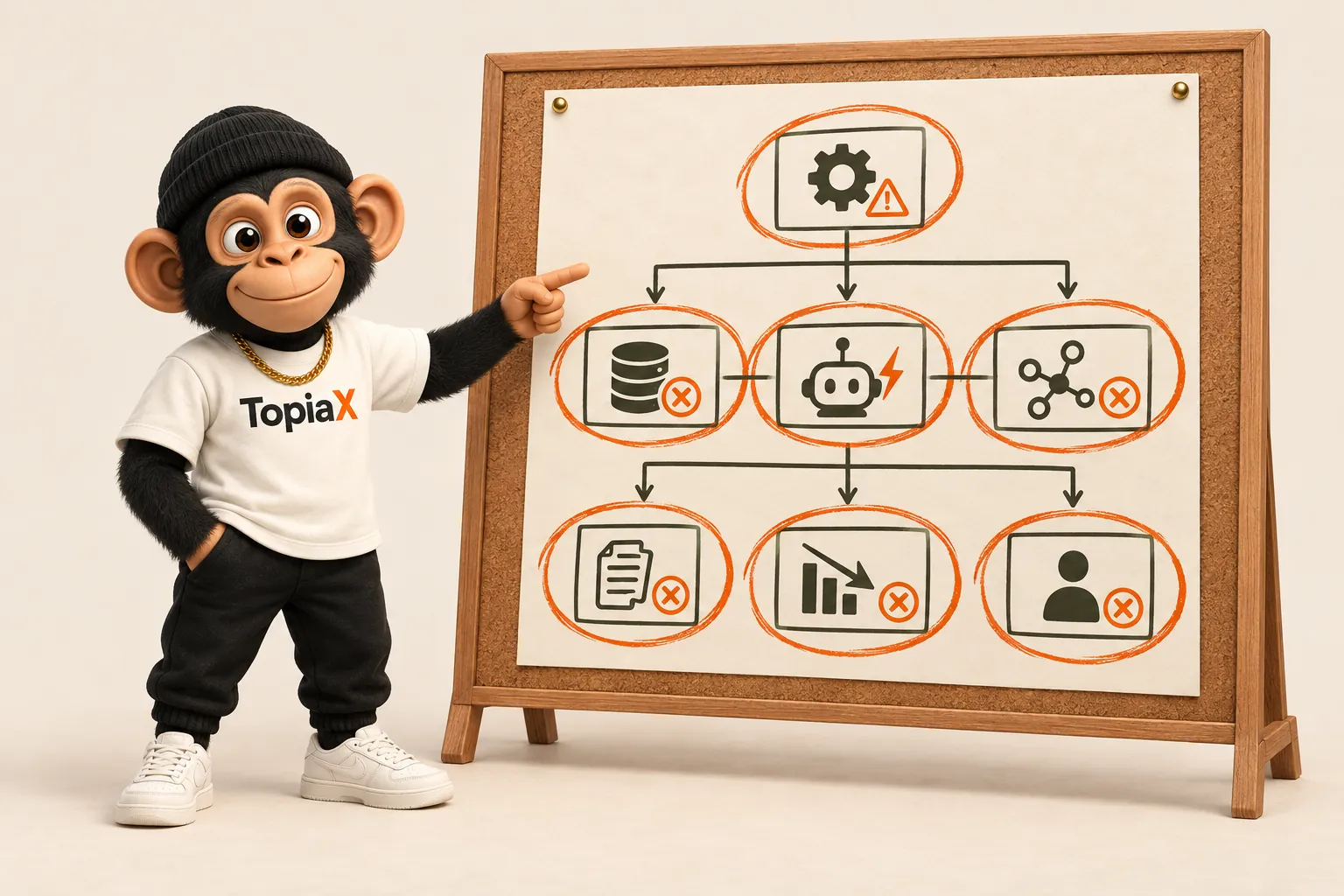
- A map of the workflow, tools, data, and high-cost failure paths.
- A representative evaluation set (edge cases, must-escalate cases, known bad paths) - not only happy-path prompts.
- Proportionate controls: permissions, validation, fallbacks, retries, or human approval where impact is high.
- Enough observability that an engineer can trace a failed run.
- A release decision (go / no-go / conditional) with remaining risks written down.
Without those outputs, you mostly bought advice and slides.
Typical Topiax price ranges (fixed scope)
| Offer | Price | Timeline | Best when |
|---|---|---|---|
| AI App Scan | $400, credited in full toward a Review booked within 30 days | 3 business days | You want proof of a problem before paying for a full review |
| 48-hour Launch Readiness Review | $1,250 | 48 hours | AI-built app needs a pre-launch readiness report |
| AI Reliability Sprint | $4,500 sprint; optional continuity at $1,500/mo | About 10 business days | A Review found problems in the app or its agent/RAG workflow that you want fixed for you |
| Custom AI Workflow Integration | $10,000–$35,000, by invitation | 3 to 8 week build after a paid one-week discovery | The workflow itself still needs to be built into real systems |
These numbers are public on pricing, which also lists the founding-client price for the Review while founding slots remain. They are not a bidding floor for unbounded work.
What a $4,500 reliability sprint should include
At Topiax the Sprint's scope is set by the findings of a Launch Readiness Review, and it includes:
- Fixes for every Critical and High finding, plus the Mediums that fit, as reviewed pull requests
- AI guardrails: tightened system prompts, input and output filters, retrieval fixes for RAG features, and cost limits per user
- An automated eval suite set up in your repository
- Monitoring and alerts in your existing tools
- An updated Launch Readiness Report showing before and after
- A handover document, a 20-minute handover video, and 30 days of support for issues caused by the Sprint's changes
Not included: new features, redesigns, a move to a different platform or framework, native mobile apps, building a brand-new agent from zero, company-wide AI strategy, compliance certification, penetration testing as a legal product, or “eliminate hallucinations forever.”
How long it should take
A useful reliability intervention is measured in weeks, not quarters, if the workflow and access are ready.
- Days 1–2: agree the fix list and set up staging and tests.
- Days 3–8: fix, and add the guardrails and the eval suite.
- Days 9–10: re-test everything and hand over.
If access to traces, environments, or decision owners is delayed, the calendar stretches - not because reliability “takes longer,” but because the inputs were not ready.
What freelancers and in-house work actually cost
Hourly rates hide scope variance. A $30–150/hr engineer can be excellent and still leave you without a release checklist if nobody defined one.
Compare the fixed-scope options on pricing when the real decision is process vs person vs ship-as-is. Doing nothing is not free: every unhandled edge case becomes a permanent manual handoff tax.
Who should not buy yet
Disqualify (or delay) reliability consulting when:
- There is no concrete workflow - only a desire for “AI ideas.”
- Nobody owns the release decision or can grant access to examples and traces.
- The request is a compliance certificate, pen test, or legal opinion outside engineering scope.
- Leadership wants a guarantee of zero errors rather than proportionate controls and evidence.
In those cases, the honest next step is internal scoping, the free 5-minute profile, or a different specialist.
How to evaluate any reliability quote
Ask every vendor - including Topiax - the same questions:
- Which workflow is in scope, and which is not?
- What evidence will we have at the end (eval set, traces, release note)?
- What actions will still require a human?
- What remains risky after the engagement?
- Who owns the system after handover?
If answers stay abstract, the price is not the problem - the product is.
Why this market is messy
Gartner has predicted that a large share of agentic AI projects will be canceled by end of 2027 because of cost, unclear value, or inadequate risk controls. That is a market signal, not a reason to buy fear. It is a reason to buy bounded reliability work tied to a real workflow and a release decision.
Practical next step
If you already have a live or near-live agent or RAG path:
- Take the free 5-minute profile to see where the gaps are.
- Compare offers on pricing.
- Book a fit call only when you can name the workflow, the failure cost, and who decides.
For how to structure evaluation itself, read How to evaluate AI agents and RAG systems before production breaks them.