Strategy
A grounded synthesis of Global South, Global North, and shared challenges — scaled against WHO, UN, World Bank, and WEF data — and the places software is a force multiplier, not a substitute.
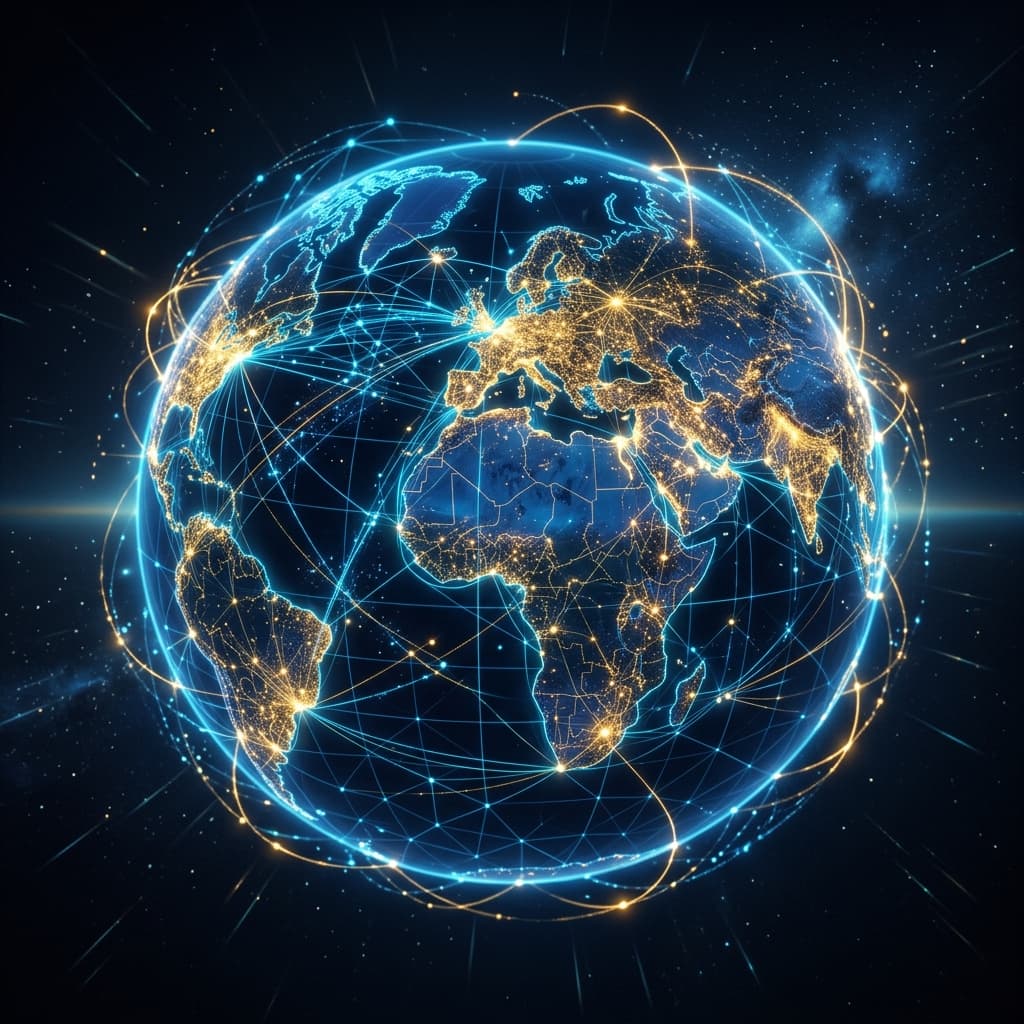
Let’s be honest right up front: this is a messy, working list. I built it around the UN's Sustainable Development Goals, World Bank "grand challenges", and the World Economic Forum's latest risk report. But rather than just listing abstract problems, I want to look at where software and AI actually make a dent.
Two reality checks before we dive in:
- AI isn't a magic wand. For nearly everything below, software is just a force multiplier for funding, good governance, and physical infrastructure—not a replacement for them.
- The "North vs. South" divide is blurry. Countries like India and the Gulf states don't fit neatly into boxes, and plenty of problems simply don't care about borders. So, alongside the two regional lists, there's a third bucket for challenges that hit us globally.
Let's get into it.
Global South
Lower- and middle-income regions: most of Africa, South and Southeast Asia, Latin America, and parts of the Middle East.
 Global South: last-mile delivery, solar mini-grids, and digital tools meeting village infrastructure
At Topiax, this is where we operate most directly. These aren't abstract thought experiments; they are the daily, operating realities of the health, financial, and government systems we build for.
Health and care delivery
 Hospital monitoring equipment in an operating theatre — the specialist layer that rarely reaches the last mile
1. Mothers and babies dying needlessly. In 2023, around 260,000 women died from pregnancy complications—about one every two minutes. Most were preventable. Offline AI decision-support tools can help community health workers spot risks early, bringing specialist-level guidance to the last mile.
2. Diagnosing malaria and TB. Malaria killed over 600,000 people in 2024, overwhelmingly in Africa. When there's no lab technician for miles, AI computer-vision can instantly read rapid tests and microscope slides to start treatment faster.
 Vaccine and cold-chain logistics depend on reliability that last-mile clinics often lack
3. The last-mile vaccine cold-chain. Life-saving vaccines spoil when logistics break down. We're already seeing IoT sensors monitor cold chains and AI-routed drones fly blood and vaccines to remote clinics in Rwanda and Ghana.
4. Catching disease outbreaks early. Local outbreaks like cholera often fly under the radar until it's too late. Machine learning models that analyze SMS symptom reports and mobility data can flag anomalies, helping responders act fast.
Agriculture and food security
 A farmer working rows of crops at scale — yield gaps still dominate smallholder systems
5. Helping smallholder farmers grow more. Farmers often face massive crop losses from pests or lack of agronomic advice. AI tools that detect crop diseases through a phone camera—or provide voice advice in local languages—can instantly close this information gap.
6. Forecasting famine. Last year, over 640 million people faced hunger. Using satellite imagery, AI can forecast crop failures and price shocks months before a crisis hits, allowing for proactive aid.
 Fresh produce at market — post-harvest loss can erase a third of some harvests before sale
7. Stopping food waste. Up to a third of some harvests rot before ever reaching a market. AI-optimized routing and smart micro-cold-storage can drastically cut this waste.
Financial and economic inclusion
 Mobile money and digital payments are already rewriting access in markets without branch banking
8. Banking the unbanked. Over a billion adults are locked out of the formal financial system. AI changes the game by using alternative data (like mobile phone usage) to build credit scores for people with no financial history, while mobile money platforms slash the cost of remittances.
9. Formalizing the hidden economy. Governments struggle to protect informal workers or collect taxes. Simple, AI-assisted mobile bookkeeping helps informal businesses step into the formal economy smoothly.
10. Proving who owns what. Undocumented land fuels conflict and halts investment. Tamper-proof digital registries, backed by AI record-processing, can help formalize land ownership at a national scale.
Governance, identity, and justice
 Identity and document systems are the quiet prerequisite for banking, healthcare, and voting
11. The invisible billions. Nearly 3 billion people lack a digital ID, locking them out of online banking, healthcare, and voting. Biometric AI systems are making it cheaper and easier to give people legal, verifiable identities.
12. Cutting red tape. Slow bureaucracy and opaque government procurement drain public trust and funds. AI can spot procurement anomalies and use chatbots to speed up basic citizen services like permits.
13. Clearing court backlogs. Millions of cases languish for years in overloaded courts (India is a prime example). AI can't replace judges, but it can triage cases, review documents, and optimize scheduling to clear the logjam.
Climate, environment, and infrastructure
 Solar installation — off-grid generation is often the only realistic path where the main grid will not arrive for years
14. Turning the lights on. Over 700 million people still lack electricity. AI helps optimize solar mini-grids and predict demand, making off-grid power viable in places the main grid won't reach for decades.
 Forest canopy from above — illegal logging and wildlife loss still move faster than enforcement
15. Stopping deforestation and poachers. The Amazon and Congo basins are losing trees faster than enforcement can track. Satellite AI flags illegal logging in near real-time, while acoustic sensors detect poachers before they strike.
 Clean water access remains one of the largest unfinished infrastructure jobs on earth
16. Clean water access. Billions lack safe drinking water. AI is being used to map groundwater reserves and predict when pumps will fail, keeping the water flowing where new pipes can't yet be built.
 Dense urban informal housing — tenure insecurity and missing services, not just “affordability”
17. Upgrading informal settlements. Over a billion people live in slums. Drones and AI help city planners map these dense areas incredibly fast, paving the way for formal services and upgraded housing.
Education, language, and connectivity
 Classroom attention is scarce at high student-to-teacher ratios — adaptive tools only matter if they work offline
18. Overcrowded classrooms. When a teacher has 60 students, personalized attention is impossible. Offline AI learning apps adapt to each student's pace, filling the gap.
19. The digital language barrier. The internet ignores thousands of indigenous and regional languages. Modern LLMs are finally capable of translating and providing voice interfaces in these low-resource languages, bringing millions online.
20. Bridging the connectivity gap. 2.2 billion people are still offline. AI helps telecom companies plan networks more efficiently, deciding exactly where to place towers or use satellite backhaul to reach the unconnected affordably.
Global North
North America, Europe, Australia, New Zealand, Japan, and South Korea.
 Global North: aging societies, dense cities, strained care systems, and infrastructure under pressure
In wealthy nations, the problems shift. It's less about a total lack of basic access and more about systems buckling under extreme cost, complexity, and the strain of aging populations.
Health and aging
 Eldercare is already a workforce problem, not only a medical one
21. The overdose crisis. We are losing tens of thousands of people a year to drug overdoses, particularly in the US. Predictive AI helps flag risky prescribing patterns, and real-time alert systems tied to naloxone are already saving lives.
22. Caring for an aging population. Countries like Japan and parts of Europe simply don't have enough caregivers for their elderly. AI fall-detection and remote monitoring sensors allow people to live independently longer, stretching scarce human care.
 Mental health demand has outpaced therapist supply across most wealthy countries
23. The youth mental health crisis. Therapists are overwhelmed by skyrocketing anxiety and depression rates. AI isn't a replacement for human therapy, but it can triage patients, routing them to the right level of care faster so they don't languish on waitlists.
24. Healthcare's paperwork nightmare. Especially in the US, doctors spend half their time fighting insurance claims. AI can automate medical coding and claims review, cutting massive administrative bloat.
 Hospital systems absorb chronic disease load that remote monitoring could catch earlier
25. Managing chronic disease. Diabetes and obesity are breaking health budgets. AI-personalized care plans and remote monitoring help catch complications early, keeping patients out of the hospital.
Housing, infrastructure, and economy
 Housing affordability has become a structural failure in many Northern cities
26. The housing affordability crisis. From London to Sydney to San Francisco, housing is simply unaffordable. AI speeds up zoning analysis and permitting, and predictive models can even identify households at risk of eviction before it happens.
 Aging bridges, roads, and water systems fail faster than budgets replace them
27. Crumbling infrastructure. Roads, bridges, and water pipes built in the 20th century are failing. AI sensor networks predict when a bridge or pipe needs maintenance before it collapses, saving money and lives.
28. Rural broadband. Even in wealthy countries, rural areas suffer from terrible internet. AI optimizes network planning to deploy fixed-wireless and satellite connections where laying fiber optic cables is too expensive.
29. Modernizing the power grid. Our old grids can't handle electric vehicles and solar panels. AI balances the grid in real-time, preventing blackouts as our energy mix changes.
30. Scamming the elderly. Romance scams and impersonators are robbing older adults. Banks now use AI to detect weird transaction patterns, pausing transfers before the money disappears.
Justice, safety, and information
 Courts and public defenders are overloaded long before the hearing starts
31. Overworked public defenders. Public defenders often get just minutes with a client before a hearing. AI can speed-read case files and prep documents, letting lawyers spend their time actually defending their clients.
32. Preventing violence. A severe issue particularly in the US. When carefully governed, AI can integrate cross-agency data to predict where violence interruption programs are needed most.
 Local newsrooms have thinned out, and with them local accountability
33. The death of local news. Thousands of local papers have folded, taking community accountability with them. AI tools help skeleton-crew newsrooms transcribe interviews and dig through massive document dumps to break big stories.
 Wildfire seasons are lengthening across North America, Southern Europe, and Australia
34. Fighting mega-fires. Wildfire seasons are getting longer and more destructive. AI satellite models predict fire spread, helping emergency crews evacuate towns and deploy resources faster.
35. Saving pension systems. Aging populations are draining retirement funds. AI actuarial modeling helps predict shortfalls and detect fraud, keeping these systems solvent.
Global and shared
The same underlying problem, different manifestations by region.
 Shared problems: climate, health systems, inequality, and trust fail differently North and South — but they fail together
These are the problems that refuse to look at a map. The physics and mechanisms are planetary, even if the local lived experience looks different.
Climate and environment
 Climate mitigation is the same physics with very different starting points
36. Fighting climate change. The North needs to decarbonize heavy industry, while the South needs to grow without polluting. AI optimizes energy grids, discovers new materials for better batteries, and cuts industrial waste everywhere.
37. Surviving drought. Water scarcity hits the Sahel and the US Southwest alike. AI predicts water demand and spots hidden leaks in city pipes, conserving every drop.
38. Choking on air pollution. From Delhi to Los Angeles, smog is a killer. AI analyzes data from cheap air sensors to predict pollution spikes and guide traffic or industrial shutdowns.
39. Managing the world's trash. The South struggles with a lack of collection, while the North struggles with contaminated recycling. AI is now sorting recycling on conveyor belts and optimizing garbage truck routes globally.
40. Protecting biodiversity. We are losing species everywhere. Machine learning processes satellite and drone data to track ecosystem health, ensuring conservation money goes where it's needed most.
Health and wellbeing
 Lab capacity, diagnostics, and discovery still decide who gets a fair shot at surviving the next crisis
41. Stopping the next pandemic. The next COVID-scale event could start anywhere. AI genomic surveillance and simulation models can help us detect it earlier and distribute resources faster next time.
42. The rise of superbugs. Antimicrobial resistance could kill 39 million people by 2050. AI is discovering new antibiotics and helping doctors avoid over-prescribing the ones we have left.
 The mental health treatment gap is a provider shortage in the North and near-absence of workforce in much of the South
43. The global mental health gap. Whether it's long waitlists in the North or zero therapists in the South, the world needs mental health support. AI triage tools extend the reach of whatever human specialists are available.
44. Curing neglected diseases. Diseases that mostly affect poor countries get very little R&D funding. AI drastically cuts the time and cost of drug discovery, making it economically viable to cure neglected diseases.
Economy and work
 Platform work looks different in Lagos and London — the fairness questions do not
45. Protecting gig workers. Uber and Deliveroo drivers face the same algorithmic unfairness whether they're in London or Lagos. We need AI to make scheduling and pay algorithms transparent and auditable.
 Wealth and income gaps are widening inside nearly every country, North and South alike
46. Widening inequality. The gap between rich and poor is growing almost everywhere. AI can help governments spot tax evasion among the ultra-wealthy while making sure welfare benefits actually reach the most vulnerable.
Security, trust, and information
 Critical infrastructure security is a rising attack surface everywhere — and under-resourced teams feel it first
47. Fighting deepfakes and disinformation. Generative AI makes it cheap to lie at scale, threatening elections globally. We have to use AI to fight back—watermarking authentic content and fact-checking at machine speed.
48. Securing critical infrastructure. Hackers are targeting power grids and water plants worldwide. AI anomaly detection acts as an unblinking guard for under-resourced security teams.
49. Stopping human trafficking. Trafficking spans origin and destination countries across the globe. AI analyzes financial patterns and supply chain data to help investigators map and dismantle trafficking rings.
 Forced displacement is a logistics and dignity problem at global scale
50. Managing the refugee crisis. Over 117 million people are displaced globally. AI helps humanitarian agencies optimize logistics, getting food, shelter, and resources to the right places faster.
Corrections worth naming rather than hiding
A few caveats to keep this grounded:
- Nuance matters: Gun violence and the collapse of local journalism read as distinctly American problems, not universal "Global North" issues. Housing is also split deliberately: the North faces an affordability crisis, while the South faces informal, insecure settlements. They share a word, but they are entirely different problems.
- What didn't make the cut: I left off clean cooking access (which affects 2 billion people), demographic decline in East Asia, and orbital space debris. All real, all massive, but 50 is a tight limit.
What this means if you build in African and Gulf markets
A good chunk of the Global South list above isn't just a thought experiment. It is the actual product surface for government service delivery, health systems, payments, identity, and logistics — the very same lanes Topiax works in.
If you are shipping AI into these systems, asking "can the model do it?" is usually the wrong question. The right questions are:
- Does it work offline, on bad Wi-Fi, or when the power cuts out?
- Does it genuinely help a human expert, rather than pretending to replace them?
- Is there a clear audit trail for regulators, ministries, or bank risk committees?
- What happens when the model inevitably makes a mistake at the worst possible moment?
These are production questions. They are the difference between a flashy demo that photographs well and a resilient system that actually survives contact with real clinics, real courts, and real payment rails.
If you want a clinical look at whether your agent or RAG workflow is ready for that environment, start with the Agent & RAG Reliability Audit — or book a fit call if you are mid-build and need a second set of eyes before your next release gate.
Photo credits: section photography via Pexels; cover and region illustrations are Topiax original assets.