Task-oriented operator flow
Quick actions make it easy to present the product as a working desk tool rather than a static reporting environment.
Freight operations desk for quoting, tracking, shipment handling, invoices, client records, and support workflows.
Screen walkthrough
This gallery shows progression, not just a single hero frame. Use it to talk through navigation depth, records, analytics, and workflow context during a call.
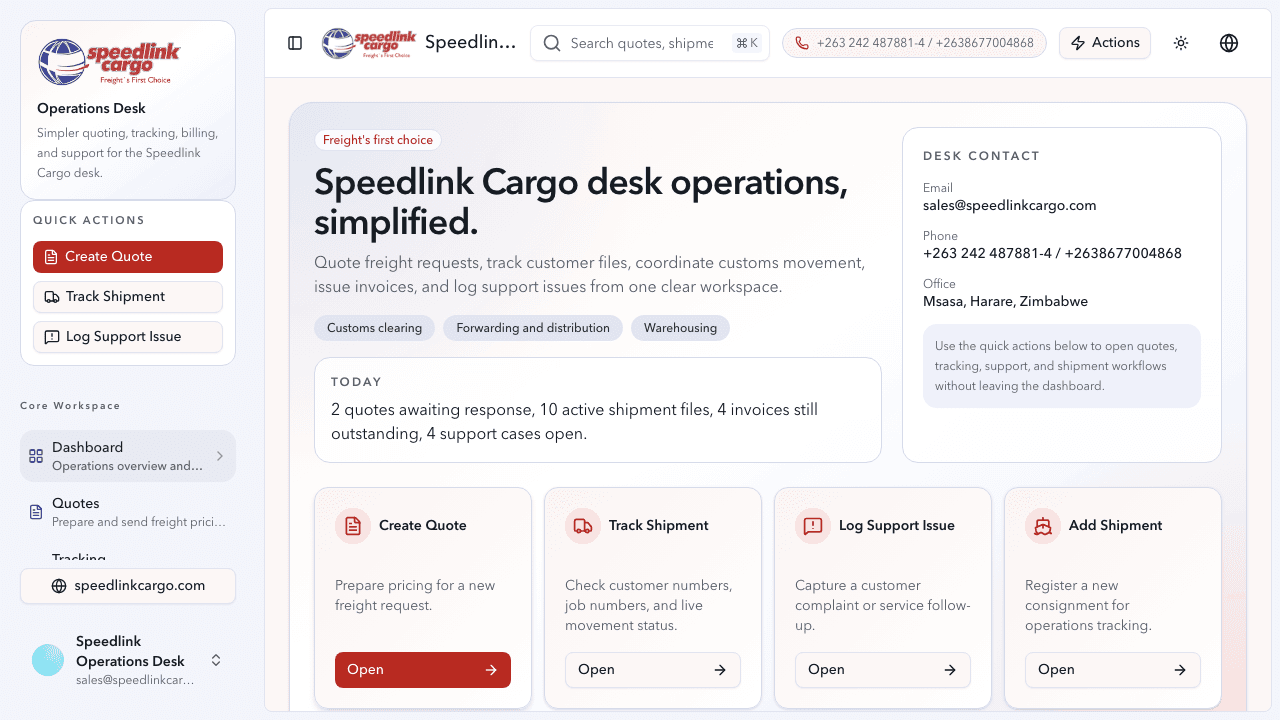
Primary interface capture used for the listing card and story lead.
Overview
Speedlink is one of the cleaner logistics demos in the list because the value proposition is explained in plain operational language. The dashboard centers on quote creation, shipment tracking, billing, and support, while the workspace expands into clients, customs status, and admin tools.
Strongest story angle
Frame it as freight software built for the desk team that has to price work, move cargo, and keep customers informed.
Observable modules
Why this one works
Quick actions make it easy to present the product as a working desk tool rather than a static reporting environment.
Pricing, tracking, customs status, billing, and support cover the operational chain a freight desk actually manages.
This case study is useful for conversations about service operations, customer communications, and logistics software modernization.
Motion outline
Open with the operations desk positioning and quick actions.
Animate quotes, tracking, shipments, and invoices as the central workflow arc.
Close on a concise line about freight coordination from a single desk.
Next publishing pass
The structure is now cleaner: better screenshots, stronger conversion paths, and shared page chrome that behaves correctly. The next layer is adding repository-backed build notes and verified outcome data.
Still worth adding