The operating layer for distributed infrastructure.
GridKeep turns fragmented infrastructure signals into governed, verified action. Zimbabwe first, Southern Africa next.
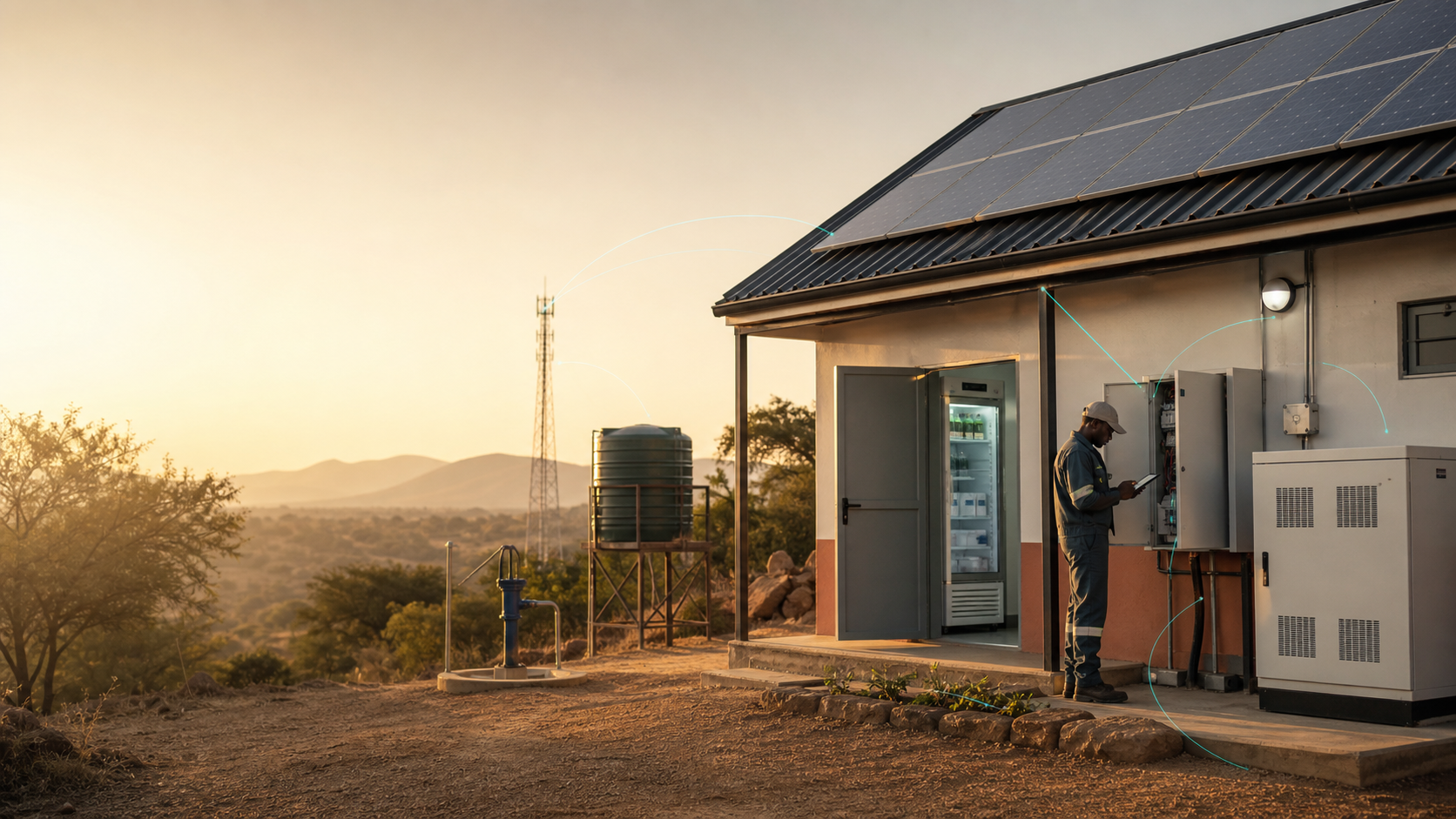
Infrastructure is being deployed. The operating context isn't.
The assets are distributed, but the decisions are still stitched together across dashboards, messages, spreadsheets, and field teams.
Signals live in different systems
Telemetry, WhatsApp, SMS, spreadsheets, and field notes describe the same site without sharing one operating picture.
Triage happens after consequence
An asset can drift for hours before anyone knows whether it is a real failure, a sensor fault, or a local power event.
Proof gets lost between teams
A dispatch may happen - but the operator cannot easily show what changed, who confirmed it, or whether it recovered.
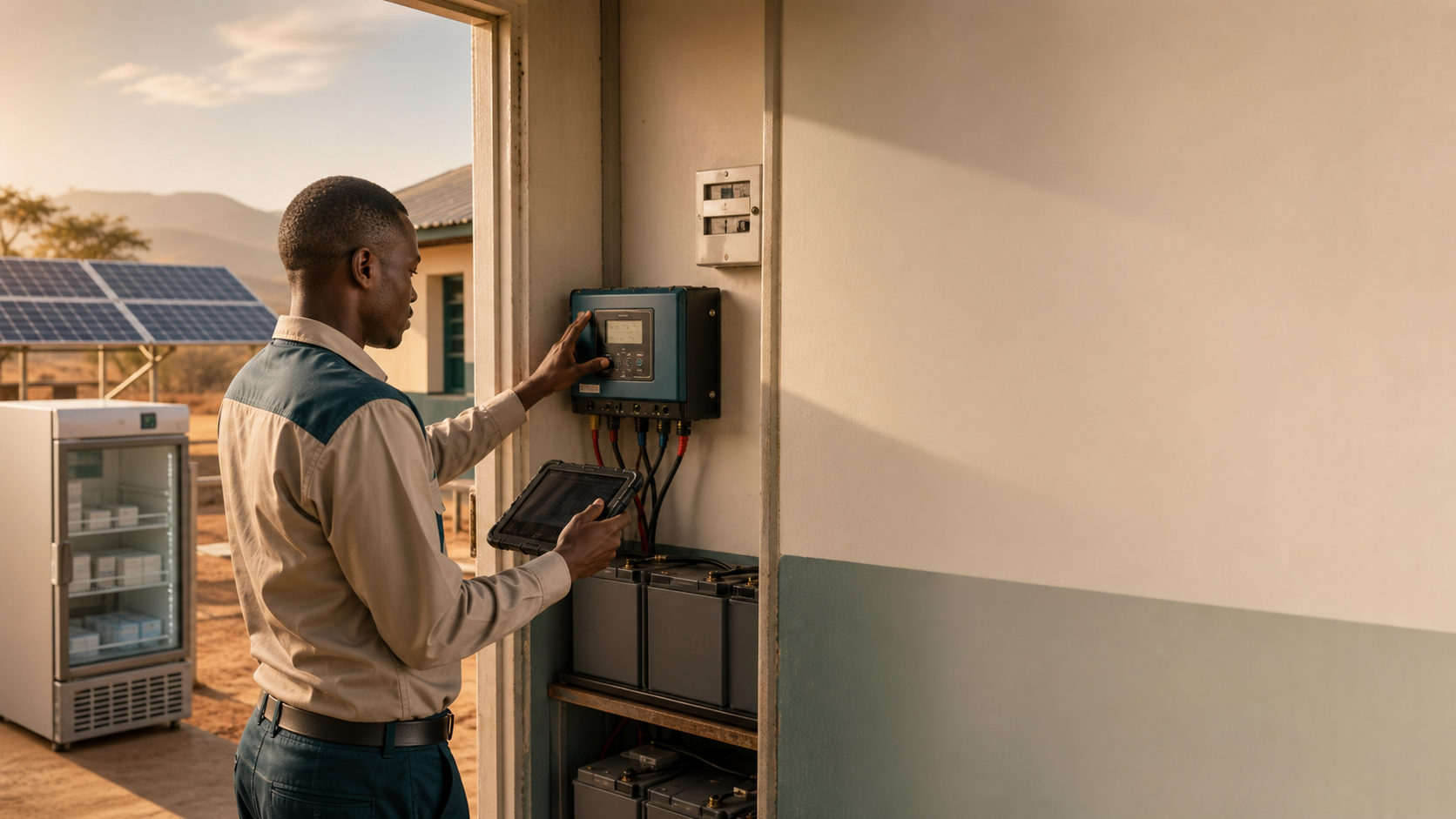

The problem is not a lack of data. It is the distance between what the data says and what a team can safely do next.
GRIDKEEP THESISGridKeep closes the gap between signal and action.
One governed control loop adds context, control, and proof to every consequential decision.
See the signal before it becomes a service failure.
Bring telemetry, field notes, messages, and asset context into one operating picture.
One operating layer. Four surfaces.
Command centre, digital twin, decision copilot, and evidence ledger - connected by one accountable control loop.
Operational truth, in one view.
The asset base is growing. The control plane is still missing.
Zimbabwe is a bounded proving ground for distributed health and cold-chain operations. The operational case is public; GridKeep product proof is still ahead.
Evidence boundary. This brief makes no market-size, asset-count, or GridKeep traction claim. The commercial model remains a hypothesis to validate in a paid pilot.
More distributed assets create more coordination cost.
Health networks, cold-chain programmes, and energy partners already manage signals across different tools. The missing layer is the accountable handoff between what changed and what someone should do next.
Start with a paid proof in health and cold chain.
The first buyer owns distributed sites, exceptions, and recovery evidence. The initial deployment hypothesis is a 25-site, 90-day health and cold-chain pilot in Zimbabwe; mining is a later adjacency.
A fridge drifts. The team sees why, not just that it happened.
GridKeep correlates temperature, battery, connectivity, and the last field note before it proposes the safest next step.
Land with a paid proof. Grow by site.
The commercial hypothesis is simple: start with a bounded deployment, then turn the same operating context into recurring software across more sites and asset classes.
We sit between the signal and the consequence.
Existing systems remain useful. GridKeep is the governed workflow and evidence layer above them, so replacing the system of record is not the entry requirement.
The product surface is ready. The proof is next.
GridKeep has enough product surface area to earn a pilot. It does not yet have customers. The next milestone is a signed design partner and the first live deployment.
Demo-ready / not production. Current operating values are synthetic and no live telemetry, messaging, CRM, or authentication integration is claimed.
Cyprian Aarons
Founder & Principal Engineer at Topiax. Builds reliable AI systems, secure data workflows, and production-ready agent architecture.
Turn the thesis into live proof.
We are looking for design partners and a bounded deployment round to connect the loop to real sites, real teams, and real outcomes.
25 design-partner sites
3 failure classes
90 days to learn
Clear by design. Synthetic operating values are labeled. Pricing and milestones are hypotheses. No customer logos, ARR, or production uptime are claimed.